Nothing announces permanence like stone steps. New England's oldest homes still wear their original granite and bluestone entries — and today's bluestone treads and solid steps deliver the same forever-quality with far more finish options. This guide covers both systems, the dimensions inspectors look for, and what the 2026 market charges.
Two ways to build stone steps
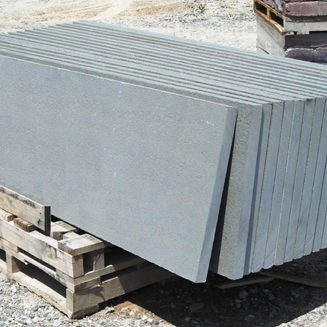
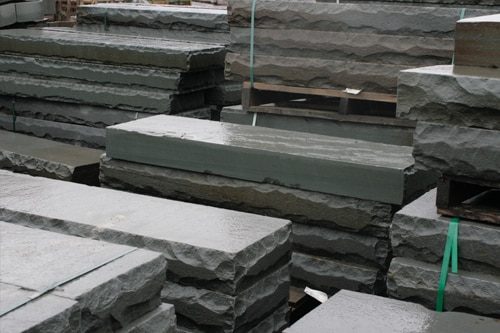
Treads on masonry: 2″-thick thermal bluestone treads set over a block, brick or poured core — the standard for porch stairs and stoops. Treads come in stock depths of 12″ with lengths from 36″ to 72″, with eased, thermal or rock-faced front edges. Solid slab steps: massive one-piece bluestone blocks — typically 6″ to 7″ rise each — stacked as complete steps. Nothing to delaminate, nothing to repoint, an entry that reads quarried-from-the-earth because it was.
The dimensions that pass inspection (and feel right underfoot)
- Rise: 7–7.75″ maximum under residential code nearly everywhere in New England; 6–7″ feels most gracious outdoors.
- Run (tread depth): 11″ minimum; 12″ standard with a 1–1.5″ nosing overhang.
- Consistency: risers within 3/8″ of each other across the flight — the rule trip hazards and inspectors both care about.
- Landing: at least as deep as the door is wide; stone landings pair with the walkway guide.
2026 pricing
Solid steps cost more per piece but often less per step installed than core-and-tread construction on short flights, because the mason's time drops dramatically. Access is the wildcard — solid steps want machine placement. Full variable breakdowns in the cost guide.
Steps as part of the whole
The strongest New England entries treat steps, walk, landing and stoop cheeks as one composition in one stone. Rock-faced solid steps with an irregular flagging path read country-estate; thermal treads over brick cheeks with a pattern walk read village-classic. Bring photos of your entry to the quote form and we'll spec both approaches with real numbers.